
Choosing the wrong fabric can hurt your dog harness product—returns, bad reviews, and low sales are just the beginning. In today’s competitive pet market, material matters more than ever. This guide helps sellers and brand founders choose the best fabric based on comfort, design, and target customer.
The best materials for a dog harness include nylon for durability, polyester for vibrant prints, mesh for breathability, neoprene for premium comfort, and RPET for eco-conscious branding. Each material fits a specific market—from active dogs to luxury buyers. To succeed, match your material choice with your brand’s positioning, target pet type, and sales channel.
Let’s break down each fabric used in modern dog harnesses—its pros, cons, and ideal use cases—so you can choose smart and build a product your customers will trust.
Table of Contents
What Fabric Is Best for a Dog Harness?
There’s no one-size-fits-all answer. The best material depends on your brand strategy. For rugged outdoor harnesses, go for nylon. For fashion brands, use polyester. For high-end comfort? Think neoprene + mesh combo.
Material-by-Material Breakdown
1. Nylon
Nylon is a go-to choice for its high tensile strength, abrasion resistance, and low cost. It’s great for everyday wear and dogs with high energy. However, it’s not very breathable and may retain odors.
- Strong, elastic, long-lasting
- Can absorb moisture, slow-drying
- Best for: Outdoor, training, functional gear
2. Polyester
Polyester offers decent durability but with better color retention and weather resistance. It dries faster than nylon and is more UV-resistant, making it great for outdoor harnesses.
- Lightweight, dries fast, supports sublimation printing
- Best for: Fashion-driven brands with printed designs
3. Oxford Fabric
Oxford is often used as the outer layer for added texture and strength. It’s more rugged than plain polyester and has a “premium canvas” feel.
- Textured look, durable
- Best for: DTC brands looking for a luxury, earthy look
4. Mesh
Soft, breathable, and comfortable, mesh cotton is best for small breeds and summer wear. It’s not as strong as synthetic options but excels in comfort.
- Breathable, soft, good for small dogs
- Best for: Summer harnesses, comfort-first brands
5. Neoprene
Neoprene offers a padded, flexible, and water-resistant option. It adds comfort, especially around pressure points, and pairs well with nylon straps.
- Soft, shock-absorbing, waterproof
- Best for: Premium product lines seeking comfort
6. Velvet / Corduroy
Velvet or corduroy gives a plush and luxurious feel, targeting the fashion-forward or pet pampering market. While not functional for rugged use, they create visual appeal.
- Soft, plush, elegant texture
- Best for: Boutique or seasonal gift editions
7. Teddy Fleece
This ultra-soft material creates a cozy look and feel, often used in padded chest or lining parts. It’s good for colder climates or winter harnesses.
- Warm and fuzzy, high seasonal appeal
- Best for: Winter harnesses or holiday collections
8. Canvas / Denim
Canvas or denim is more about aesthetics than function, but it’s trendy and strong enough for light-use harnesses. Add contrast stitching and labels for a “streetwear for dogs” style.
- Durable, fashionable, urban appeal
- Best for: Pet lifestyle brands with a streetwear twist
9. Twill / Tweed
Twill or tweed lend a premium, vintage look, appealing to pet brands that want to stand out with classic or “British style” aesthetics. They shine in cold weather or fashion-focused collections.
- Textured, high-end look, structured feel
- May be heavier and less breathable
- Best for: Heritage-style brands, luxury seasonal collections
10. TPU / PVC Coated Fabrics
These coated materials offer waterproofing, easy cleaning, and durability. TPU is more flexible and eco-friendlier than PVC.
- Waterproof, wipe-clean, modern look
- Best for: Outdoor, rainy-weather harnesses
11. RPET (Recycled Polyester)
Made from recycled plastic bottles, RPET is gaining popularity among eco-conscious consumers. It offers similar durability to polyester.
- Eco-friendly, durable, printable
- Best for: Brands targeting eco-conscious markets
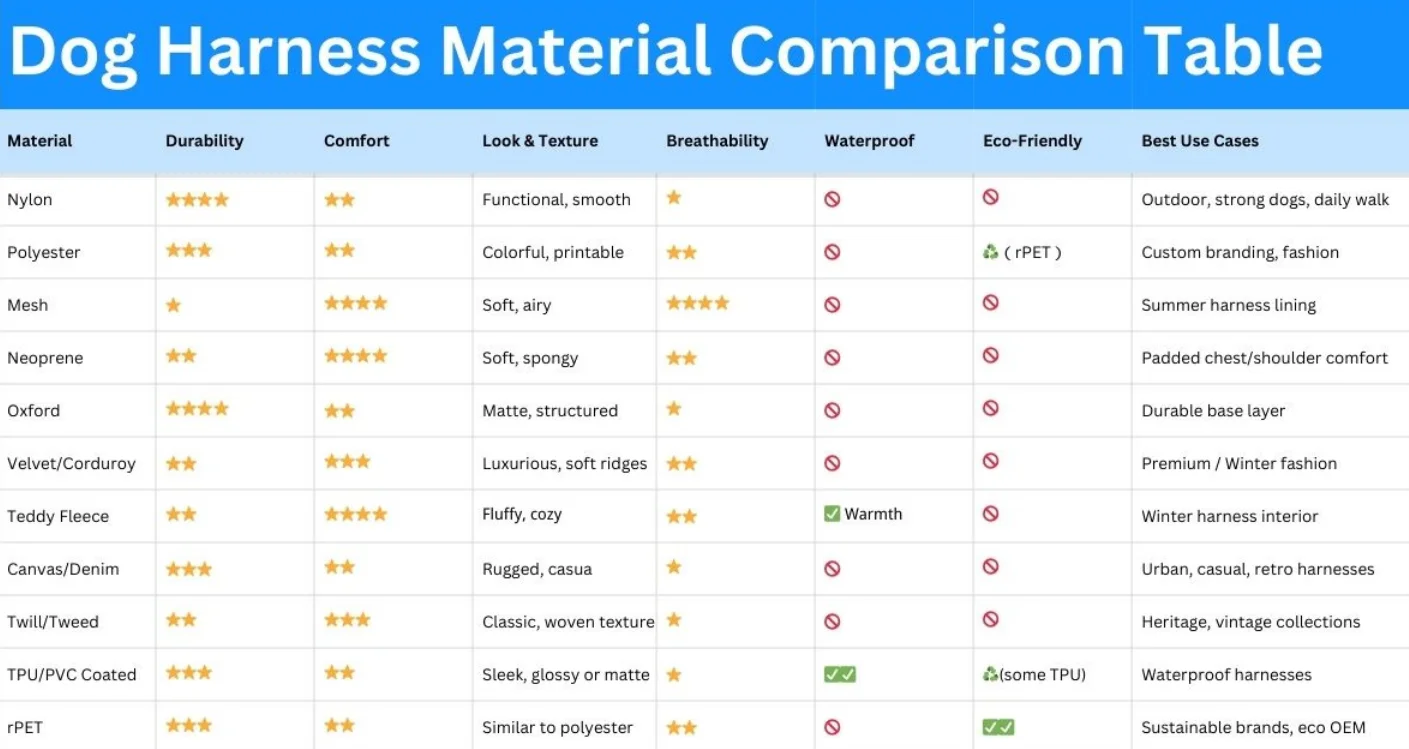
Dog Harness Materials Compared – All in One Chart
Not sure whether to use nylon, mesh, or TPU-coated fabric? This chart summarizes everything you need to know at a glance.
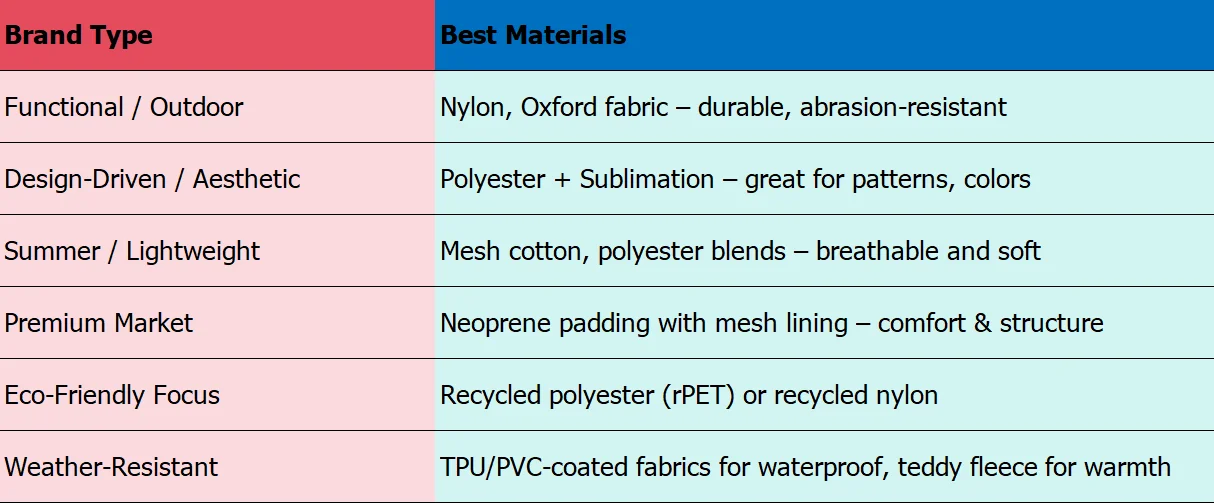
How to Choose the Right Material for Your Brand?
our material = your message. The right material tells your customers exactly what your brand stands for.
💡 Pro Tip: Mixed-material construction is standard in OEM harnesses. For example: Nylon webbing + Neoprene chest pad + Mesh lining = performance + comfort + breathability.
Want help designing your own harness construction? Contact us to get free sample materials and OEM advice
Is Nylon or Polyester Better for a Dog Harness?
Nylon: Stronger and more elastic, ideal for high-tension use.
Polyester: More color-stable, easier to print, dries faster.
💡 Many brands combine both for function + design
👉 Want a deeper comparison of nylon vs polyester in real use? Read our full material breakdown here.
Is Mesh Good for Dog Harnesses?
Yes. Mesh is breathable and lightweight—perfect for summer, small breeds, and indoor use. Combine with cotton or polyester for structure.
What Are Dog Harnesses Made Of?
Most custom dog harnesses use layered construction:
- Outer shell: Nylon, polyester, or oxford
- Lining: Mesh or neoprene
- Padding: Neoprene or fleece
- Branding: Embroidery, sublimation, rubber patch
Which Materials Work Best with Custom Branding?
Different materials support different branding and customization techniques. Choosing the right pair saves time, reduces waste, and protects your budget.
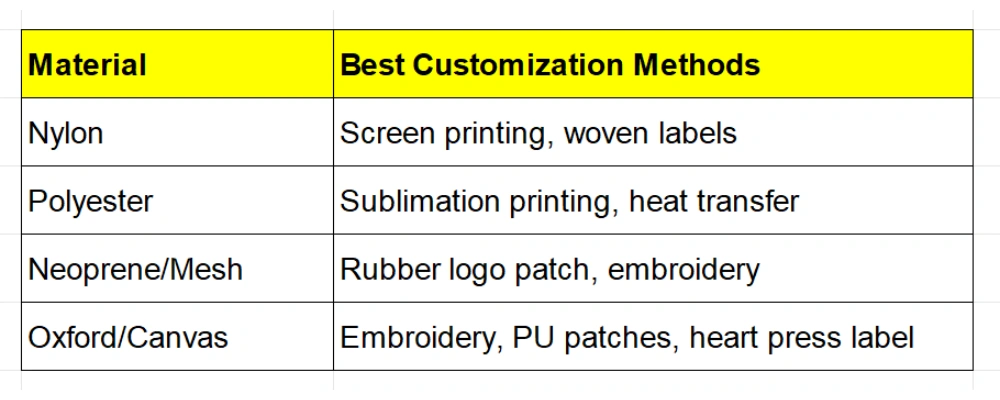
Tip: Plan 1–2 branding techniques that match your base material to stay cost-effective.
Sustainability: Eco-Friendly Fabric Options
Eco-conscious pet owners are on the rise. Offer materials that align with green values:
- RPET (Recycled Polyester): Made from plastic bottles, printable like regular polyester
- Nylon 6 (Recycled): A sustainable upgrade to standard nylon
- TPU over PVC: Lower VOC, more environmentally friendly
Use sustainability as a story—include icons, tags, and web copy that highlights your fabric choices.
FAQs About Dog Harness Materials
Nylon is the best material for strong or large dogs. It has excellent tensile strength, resists tearing, and maintains flexibility under pressure. Heavy-duty nylon webbing is commonly used in training and tactical harnesses. For extra comfort, many brands combine nylon with neoprene padding or a mesh lining to reduce skin irritation while maintaining structure. For pullers or working breeds, it's the go-to base material.
Polyester is ideal for sublimation printing, making it the top choice for brands that focus on colorful, custom designs. It holds color vibrantly, resists fading, and offers a smooth surface for sharp image transfer. Whether you're printing logos, patterns, or gradients, polyester allows full customization without compromising durability. Bonus: It also dries quickly and resists wrinkles, making it both functional and fashionable.
Yes — and you should. Combining materials is industry standard and helps balance cost, comfort, and performance. For example, a harness might feature nylon webbing for strength, neoprene padding for comfort, and mesh lining for breathability. This modular approach allows brands to hit specific product goals like waterproofing, premium feel, or summer cooling, all while managing manufacturing cost.
To make a harness waterproof, use TPU-coated or PVC-coated polyester for the outer shell. These materials repel water, resist stains, and are easy to wipe clean — perfect for rainy climates or muddy trails. For full performance, pair this with sealed or welded seams. Some brands also add neoprene to enhance padding without compromising water resistance. Avoid absorbent materials like cotton for these product lines.
RPET (Recycled Polyester) is the most popular sustainable choice in pet gear. It’s made from recycled plastic bottles, offering the same strength and printability as virgin polyester. Brands also use recycled nylon 6, which reduces reliance on fossil fuel-based fibers. For eco-friendly lines, highlight these materials in product tags and web descriptions — sustainability is increasingly a key buying factor, especially in Europe and North America.
Summary
Choosing the right material is both a branding and business decision. It affects cost, comfort, and how your product feels in a customer’s hand. Don’t guess—plan your product line from the fabric up.
Need Help Choosing the Right Materials?
At YiyayPets, we support OEM/ODM clients from concept to final production. 👉 Contact our OEM team to start your custom harness line today.