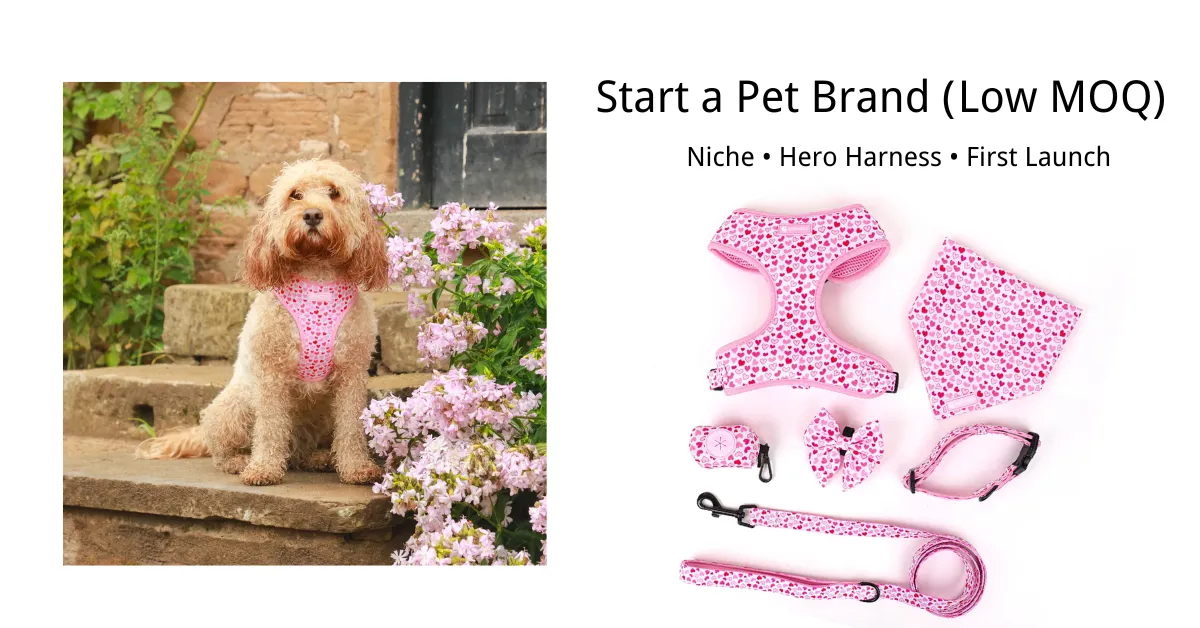
If you want a real roadmap for how to start a pet brand without getting stuck with unsold inventory, start with two decisions: a tight niche and a founder-friendly supplier. A low MOQ lets you validate demand with just 20 sets, then scale what works. This guide is for first-time founders and Amazon/Shopify sellers in the US, EU, and Australia. You’ll go from niche → hero harness → visible differentiation → fast sampling → Shopify launch → expansion once the numbers make sense.
1. Choose a Pet Brand Niche Using Dog Size + Style (target audience)
A niche is not “people who love dogs.” A niche is a specific buyer with a specific taste and problem. When your niche is sharp, your product photos, sizing strategy, and pricing become easier.
A fast way to define your niche is a 2-part lens: dog size × visual style. It keeps you focused and prevents the “launch 12 designs and hope” trap.
Lens A: Dog size (small vs. large)
- Small dogs: buyers prioritize lightweight comfort, soft touch, and “camera-ready” looks. Think smooth edges, plush textures, and pastel palettes.
- Large dogs: buyers prioritize strength, stability, and control. Think reinforced webbing, stronger hardware, and confident, bold colors.
This choice affects strap width, padding thickness, buckle strength, and how you write your product benefits.
Lens B: Style (Instagram, vintage, or functional)
- Instagram clean style: neutral colors, soft materials, and matched sets. Your feed should look consistent.
- Vintage style: textures like corduroy and tweed create boutique signals fast. This style also sells well as gifts.
- Functional/outdoor style: durability-first. Emphasize wear resistance and hardware quality.
One-sentence positioning template:
“We make [style] dog walking essentials for [dog size] owners who want [benefit] without [pain].”
If you can’t write that sentence, don’t design products yet.
2. Start Your Pet Product Line with a Hero Custom Dog Harness (low MOQ launch)
If you’re launching your first SKU, start with what creates the strongest brand impression. For most new founders, that’s a custom dog harness. It’s worn on the dog’s body, appears in every photo, and instantly signals style.
Why a dog harness is a strong first SKU
- High visibility: it becomes the center of the look in UGC.
- Clear differentiation: materials and patterns show immediately.
- Natural upsell: harness buyers often add a leash and collar later.
Keep your first SKU simple
Don’t start with 12 designs. A practical first drop looks like this:
- One hero harness design
- 2–3 colorways (one neutral + one signature + one seasonal)
- Core sizes based on your niche (small-dog range or large-dog range)
Then add set components:
- Harness + matching leash
- Optional matching collar
- Add-ons like a poop bag holder or bowtie or walking bag
Matched sets raise average order value and make your brand look complete from day one.
3. How to Start a Pet Brand and Stand Out: Materials + Patterns + Bundles
Beginners often try to compete on “more features” first—extra straps, extra rings, extra claims. That’s slow and expensive. For a first launch, win with visible differentiation:
- Material creates your brand mood
- Color/pattern drives first-click conversion
- Bundles make your economics work
1) Material = brand personality
Materials communicate positioning without words:
- Velvet says “premium boutique”
- Tweed says “heritage, giftable”
- Neoprene says “sporty, everyday”
- Teddy says “cute, cozy, viral”
2) Patterns and colorways = conversion
Your main image is a pattern test. If your colorway doesn’t stop scrolling, pricing won’t save it.
A simple approach:
- Pick one signature palette (3–5 colors)
- Use consistent hardware color (black, gold, rose gold, silver)
- Keep stitching and edge binding consistent across the line
3) Bundles = business model
Bundles raise AOV and improve ad efficiency. Selling a set also makes your brand feel premium and intentional, not random.
Quick takeaway: don’t over-engineer the first product. Build a look people want to post, then bundle it into a set that makes margins workable.
4. Pet Harness Material Guide: Neoprene vs. Velvet vs. Corduroy vs. Tweed vs. Teddy
Material is one of the fastest ways to make a new brand feel real. It also helps you avoid looking like a generic listing. Here’s a practical guide to five launch-friendly materials:
| Material | Best For | Brand Signal | Seasonal Fit |
|---|---|---|---|
| Neoprene | Everyday comfort + durability | sporty, modern | year-round |
| Velvet | Boutique, premium feel | luxe, giftable | fall/winter |
| Corduroy | Cozy vintage look | warm, retro | fall/winter |
| Tweed | Strong differentiation | heritage, upscale | fall/winter |
| Teddy | Cute, content-friendly | playful, cozy | fall/winter |
How to choose (simple matching method)
Ask two questions:
- What style are you selling—Instagram clean, vintage, or functional?
- Is your first drop year-round staples or seasonal?
Then match:
- Functional/outdoor → neoprene
- Vintage boutique → corduroy or tweed
- Premium gifting → velvet or tweed
- Social-first cute → teddy
If you plan to use branding details like PVC patches, woven labels, embroidery, or heat transfer, include them in your sample so your photos match the final production.
5. Validate Demand with a 20-Set Minimum Order (MVP inventory strategy)
Low MOQ is not a “cheap supplier” signal. It’s a testing strategy. When your minimum order is 20 sets, you can run real experiments without tying up cash.
What to test in your first 20 sets
Focus on variables that change sales quickly:
- Style direction
Instagram clean vs. vintage vs. functional - Material
For example, teddy vs. corduroy in the same size group - Colorway strategy
- 1 classic neutral (safe)
- 1 signature brand color (identity)
- 1 seasonal limited drop (urgency)
Treat the first batch as data, not destiny. Your goal is to learn which photos get clicks, which sizes move, and which bundle converts. Then you reorder the winner and scale with confidence.
6. Find a Pet Product Manufacturer: MOQ, Sampling Speed, and Communication
When founders ask for brand advice, they usually get marketing tips. The real bottleneck is execution—turning a design into a product that ships. When you evaluate a manufacturer, prioritize three questions:
1) Is the MOQ founder-friendly?
You need an MOQ that supports testing. If your first run requires 200+ sets, you’ll delay launch or take on inventory stress. A practical founder MOQ is 20 sets per size per design/patten .
2) How fast is sampling?
Sampling speed sets your launch timeline. A reliable target is 10–15 business days for sampling, depending on complexity and revisions. Fast sampling helps you launch seasonally and fix fit issues early.
3) Can they communicate like a partner?
This is the hidden metric. Clear replies, early risk warnings, and smooth revisions matter more than tiny cost differences.
A realistic 4–8 week launch timeline
- Week 1: niche, hero product direction, design references
- Weeks 2–3: sampling + feedback + revision round
- Weeks 4–6: production order + packaging prep
- Weeks 6–8: inventory arrival, product photos, Shopify setup
If you want a founder-friendly MOQ and fast sampling without slow back-and-forth, that’s exactly what YiyayPets is built for.
7. Costing and Pricing for Pet Products: Landed Cost, Margin, and Bundle AOV
Pricing is where new pet brands quietly fail. They pick a retail price they “like,” then discover ads and shipping eat the margin. Build a simple costing model first.
Your landed cost checklist
Include:
- Product cost (materials, labor, hardware)
- Packaging
- Freight + local delivery
- Duties/taxes
- Platform costs (Shopify + payment processing)
- Marketing (content, influencer seeding, ads)
A beginner-friendly pricing model
- Pick a target gross margin (example: 60% for DTC)
- Estimate your landed cost
- Back into retail price
Example:
- Landed cost $10
- Target margin 60%
- Retail needs to be $25 (because $10 is 40% of $25)
Why bundles make ads easier
Example set:
- Harness: $25
- Add leash: +$12
- Add collar: +$10
- Set total: $47
Your cost doesn’t double, but your order value almost does. This gives you room for ads and free-shipping thresholds.
8. Shopify First: Build Your Brand Story, Then Expand to Amazon
For a 0–1 founder, Shopify is a strong first channel because it lets you sell a brand, not just a listing. You control storytelling, build an email list, and collect feedback quickly.
Your first-launch Shopify checklist
- Core pages: Home, Product, About, Shipping/Returns, Contact
- Product page essentials: size chart, materials, care, hardware details, bundle options
- Visual consistency: same lighting, same palette, same model dog size, lifestyle + close-ups
- On-page FAQ: fit, returns, durability, washability, shipping time
When to add Amazon
Expand once you have a proven winning design, stable sizing feedback, reviews, and consistent reorder timing. Then Amazon becomes an expansion channel, not your learning ground.
Frequently Asked Questions
1) How much money do I need to start a pet brand?
You can start lean if you avoid large inventory orders. Budget for sampling, a small first production run, basic packaging, and content. The biggest cost risk is over-ordering before demand is proven. Low MOQ lets you test without tying up cash.
2) What’s the best first product to launch?
A dog harness is a strong first SKU because it’s highly visible and easy to differentiate by material and style. It also supports natural upsells like matching leashes and collars. Start with one hero design, then add set components.
3) How do I choose the right MOQ?
Pick an MOQ that supports testing and iteration. A 20-set MOQ is practical for founders because it reduces inventory pressure and lets you test styles, materials, and colorways. Once you see consistent sales and fewer size-related returns, increase reorder volume and expand into matched sets.
4) How long does sampling and production take?
A typical founder timeline is 4–8 weeks from concept to launch-ready inventory. Sampling often takes 10–15 business days, then production and packaging prep follow. Timelines vary by complexity, revision rounds, and shipping method. Plan for at least one adjustment cycle after the first sample.
5) Should I launch on Shopify or Amazon first?
Shopify is often better for 0–1 founders because you control brand storytelling and own customer data. Use Shopify to validate demand, build UGC, and refine sizing and bundles. Then expand to Amazon after you have a proven hero SKU, stable reviews, and a reliable reorder schedule.
Next Steps: Start a Pet Brand with Low MOQ and a Clear Launch Plan
If you’re still deciding how to start a pet brand, keep it simple: launch one hero harness, test with a small run, and scale what customers actually buy. Low MOQ reduces inventory stress and gives you clean feedback fast.
If you want feedback on your idea, share three things and we’ll map a sampling plan:
- Target market (US/EU/AU)
- Style direction (Instagram clean / vintage / functional)
- First product (harness or full set)
YiyayPets is a Dongguan-based OEM factory specializing in custom dog walking products with 20-set MOQ and 10–15 business days sampling, plus responsive communication and FBA-friendly shipping support.
Explore product categories and service details here:
- Custom dog harnesses:
/products/dog-harness/ - OEM service:
/oem-service/ - Contact us to discuss sampling:
/contact/