
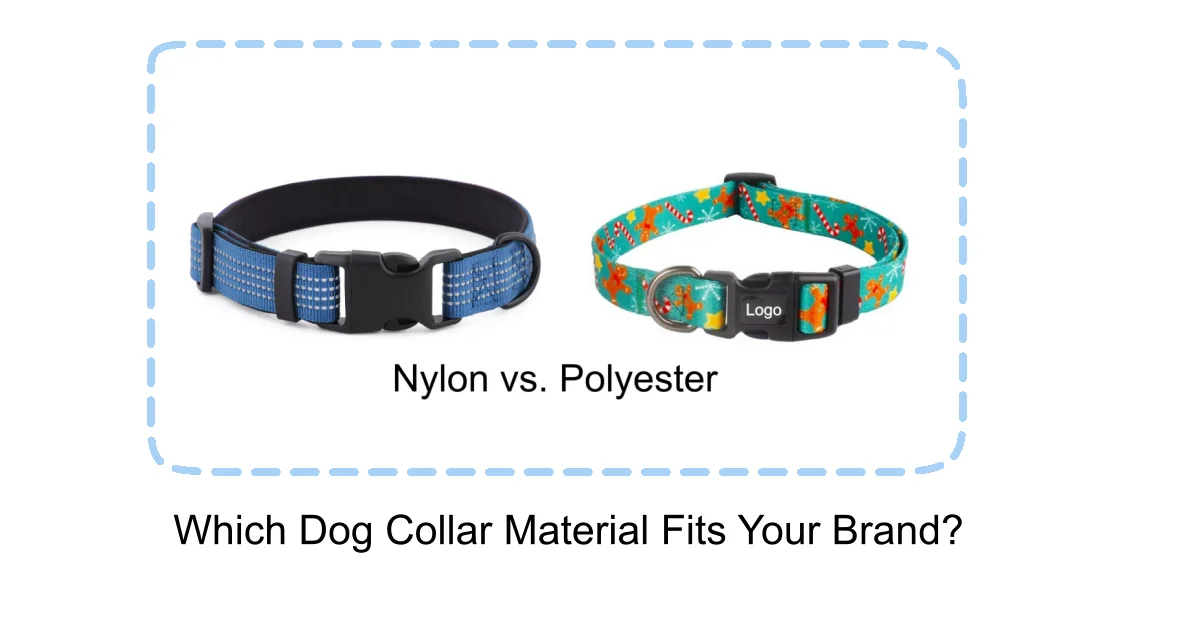
If you’re launching a pet product line or sourcing for your pet store, choosing between nylon and polyester collars and leashes might seem like a small detail. But trust me—it can shape your brand’s durability, print quality, and even customer satisfaction.
Let’s break down both materials so you can make an informed, confident decision for your business.
Both nylon and polyester are popular materials for dog collars and leashes. Nylon is known for strength and flexibility, making it ideal for active dogs. Polyester, on the other hand, offers better color retention and print clarity, which is perfect for custom branding. The best choice depends on your brand’s priorities—durability or design.
Table of Contents
Understanding the Materials
Before diving into comparisons, let’s look at the two core materials themselves.
What is Nylon?
Nylon is a synthetic fiber developed for industrial and military use. It’s known for its high tensile strength, stretchability, and soft texture. In the pet product world, nylon is often used for climbing-style leashes, heavy-duty collars, and gear for large dogs.
Key features:
- Strong and flexible
- Moderate water absorption
- Supports jacquard and screen printing
- Often positioned as a “premium” feel
Nylon is ideal for high-energy dogs, rugged outdoor use, and premium product lines where strength and comfort are priorities.
What is Polyester?
Polyester is also synthetic, but it behaves differently from nylon. It’s more rigid, has low moisture absorption, and is excellent for custom printing. Polyester holds color better over time, making it perfect for brands that focus on visuals.
Key features:
- Colorfast and UV-resistant
- Great for sublimation/heat transfer printing
- More affordable than nylon
- Quick-drying and mildew-resistant
Polyester is often chosen by brands emphasizing fashionable designs, sublimation printing, or outdoor performance.
Before diving deep, here’s what we’ll cover:
- How nylon and polyester compare in strength, durability, and feel
- Which material performs best for waterproof or outdoor use
- Customization differences: sublimation, screen printing, jacquard
- Which one is safer and more comfortable for pets
- Key takeaways to help you decide
Is Nylon or Polyester Better for Dog Collars?
Both materials are widely used in the pet industry. But they perform differently:
- Nylon is slightly softer and stretchier, giving a more cushioned feel on the dog’s neck. It’s strong and abrasion-resistant—great for large or energetic breeds.
- Polyester, in contrast, is stiffer but more colorfast. It doesn’t stretch as much, which can be good for controlled handling. Plus, it resists fading under UV exposure.
If your focus is on print quality or vibrant branding, polyester is usually the better choice. Sublimation printing on polyester creates crisp, colorful designs that won’t peel or crack over time. Nylon supports screen printing or woven logos (like jacquard), but less suitable for fine details.
Example: A startup brand focusing on seasonal or fashion-forward dog collars may prefer polyester due to its vibrant color output.
Is Nylon or Polyester Better for Dog Collars?
Both materials are widely used in the pet industry. But they perform differently:
- Nylon is slightly softer and stretchier, giving a more cushioned feel on the dog’s neck. It’s strong and abrasion-resistant—great for large or energetic breeds.
- Polyester, in contrast, is stiffer but more colorfast. It doesn’t stretch as much, which can be good for controlled handling. Plus, it resists fading under UV exposure.
If your focus is on print quality or vibrant branding, polyester is usually the better choice. Sublimation printing on polyester creates crisp, colorful designs that won’t peel or crack over time. Nylon supports screen printing or woven logos (like jacquard), but less suitable for fine details.
Example: A startup brand focusing on seasonal or fashion-forward dog collars may prefer polyester due to its vibrant color output.
What Is the Safest Material for a Dog Leash?
When it comes to safety, two things matter: tensile strength and grip.
- Nylon offers excellent tensile strength (up to 5,500 lbs per 1-inch webbing [source]). It has a slight stretch, which acts as shock absorption during sudden pulls.
- Polyester is less stretchy but holds up well under consistent pressure. Its lower water absorption also reduces slipperiness when wet.
For active dogs or large breeds, nylon may feel more comfortable and forgiving. For branding and long-term outdoor use, polyester might offer better structural integrity.
Is Polyester or Nylon Better for Dog Harnesses?
Since harnesses wrap around the dog’s body, material comfort becomes key:
- Nylon tends to be more flexible, conforming better to the dog’s shape.
- Polyester is lighter in weight and dries faster—great for wet or humid environments.
If your brand is targeting outdoor adventure dogs, polyester might be the smarter choice. It’s also mildew-resistant, helping avoid odors and material degradation.
What Material Should a Dog Leash Be?
From a business point of view, the best material balances cost, durability, and customization.
- Nylon leashes: Affordable, durable, and time-tested. Available in many thicknesses and weave patterns.
- Polyester leashes: Cost slightly more but offer long-term color integrity and better sublimation quality.
Polyester’s print compatibility makes it a top choice for custom polyester dog collars with logos or patterns. Nylon leashes, on the other hand, are still king when it comes to heavy-duty or climbing-inspired gear.
Nylon Webbing vs. Polyester Webbing – What's the Difference?
This is a key topic for brands choosing webbing for collars or leashes:
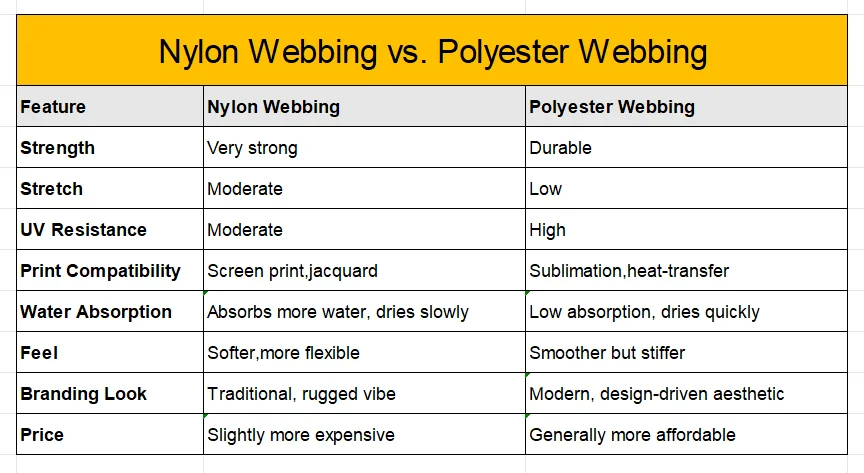
From this chart, you can see how your material choice will directly affect the product’s branding possibilities and performance.
Which Material Is More Durable for Custom Dog Leashes?
Durability isn’t just about how long something lasts—it’s about how it holds up under real-world use
- Nylon is more abrasion-resistant, ideal for rugged use (think: hiking, beach, rain).
- Polyester holds its structure better when exposed to sunlight, detergent, and sweat.
If your products are mostly indoor, lifestyle, or fashion-based, polyester offers a longer-lasting look. If your customers are more outdoorsy or active, nylon may resist fraying better.
What’s the Best Material for Waterproof Dog Collars?
Let’s talk about waterproof dog collars.
While neither nylon nor polyester is naturally waterproof, polyester absorbs less water, making it a better base material for water-resistant or quick-dry collars. Add a PVC coating and you have a lightweight, fully waterproof collar.
Nylon, once soaked, takes longer to dry and may retain odor over time.
Tip: For waterproof needs, consider TPU-coated polyester or PVC-coated nylon [source].
How Do Nylon and Polyester Affect Branding and Customization?
This is where polyester really shines:
- Polyester is ideal for heat-transfer, sublimation printing, and vibrant full-color designs.
- Nylon works better with woven jacquard logos or screen printing but might not hold detailed graphics well.
So if your brand revolves around design flexibility or seasonal collections, polyester offers more creative control.
Need to showcase multiple SKUs or limited collections? Polyester’s surface is your canvas.
Which Material Is More Eco-Friendly and Sustainable?
Good question! Both materials are synthetic, but there are emerging eco-versions:
- Recycled polyester (rPET) is made from plastic bottles—ideal for brands targeting sustainability.
- Nylon 6 or recycled nylon is available, but less common and more expensive.
Polyester’s ease of recycling and growing market for rPET gives it the upper hand if your brand wants to highlight green values.
For sustainable brands, rPET polyester offers better availability, affordability, and marketing value.
Summary
Choosing between nylon and polyester depends on what your brand values most: strength and flexibility (nylon) or vibrant design and customization (polyester). Both are great options—but for a custom, design-driven collar and leash, polyester gives you more creative control.
What material do you currently use? Thinking about switching? Let us know, or get in touch for custom samples and expert guidance.
Build with confidence. Create products your customers will love.